|
Whenever you study Scripture, you see that the Christian faith is extremely inclusive, yet at the same time extremely exclusive. It is inclusive in that Jesus gave His life so that everyone has an opportunity for salvation. It is exclusive because that salvation is found only in Him. There is no other way. Many times, this brings people to ask the question, how will the people in _____________ country be saved if they don’t know Jesus? An answer that a lot of people will respond with is based out of Romans 1, for what can be known about God is plain to them, namely, His eternal power and divine nature, have been clearly perceived, ever since the creation of the world, in the things that have been made. So they are without excuse. Paul is saying that God has revealed His power and nature through creation, and therefore anyone who sees creation has the opportunity to know about God. This leads us to the question we’re looking at today, so from nature, must a person conclude in Jesus as their Lord and Savior?
I believe that what Paul is stating in Romans 1 is not that people will conclude their salvation in Jesus Christ through nature, but rather that they will conclude that there is a God, a Supreme Being. This has been true for millennia before Jesus ever walked on the earth and professed salvation through Himself. When you look at the Exodus, and the plagues that God brought forth, they were not just a random set of plagues, but rather God was waging war on the gods of Egypt. At the final plague, God says I will strike all the firstborn in the land of Egypt, both man and beast; and on all the gods of Egypt I will execute My judgements: I am the Lord (Exodus 12:12). When you do a study of the plagues, each plague was an attack on something that the Egyptians worshipped as a god.
This is just the Egyptians, and then you have all the other religions that look at creation and believe that there is a higher being that is to be worshipped. A quick google search resulted that only 7-10% of the world is atheist, meaning that 90-93% of the world has some view of a higher power. When you look at creation, you see that there is a call for a Creator. As Christians, we give that credit to the One True God, while other religions give credit to a different god, or many other gods (polytheists). So Paul tells us in Romans 1 that we can look at creation and see that there is a Creator, and that no one has any excuse to claim ignorance. The question goes deeper though, will creation point them to Jesus? I would say not necessarily. Looking to creation does not cause me to know the name of Jesus and that He gave His life for me. Looking at creation reveals there is a power greater than myself, and therefore it invokes in us a desire to know this power. Salvation does not come through looking at creation, salvation comes through hearing the Gospel of Jesus and receiving it through faith. “’Everyone who calls on the name of the Lord will be saved.’ How then will they call on Him in whom they have not believed? And how are they to believe in Him of whom they have never heard? And how are they to hear without someone preaching? And how are they to preach unless they are sent? (Romans 10:13-15). This is where God has entrusted His Body, the people of God, to go and proclaim the good news of salvation through Jesus. We see this played out in Acts 17. Paul is on his second missionary journey, and he is traveling through Greece. He comes to Athens, and he sees that the city is full of idols, and it angers him. He goes to the Areopagus, the council that had authority over religion, morals, and education in Athens. In this council, Paul addresses them and says, "Men of Athens, I perceive that in every way you are very religious. For as I passed along and observed the objects of your worship, I found also an altar with this inscription: To the unknown god. What therefore you worship as unknown, this I proclaim to you. The God who made the world and everything in it, being Lord of heaven and earth, does not live in temples made by man…. (Acts 17:22-24). Paul noticed that the people of Athens were very religious, having many depictions of the gods that they worshipped. Just to cover their bases, they even worshipped an “unknown god”, hoping to appease it if they were unaware of that god. Paul, seeing this, takes advantage of the opportunity, and share the truth about the One True God. They were aware of greater beings, yet it required Paul to share the truth with them. God’s primary and main method for bringing salvation to the world is through you, His people. Not through pastors. Not through social programs. But through men and women who are intentionally living for God in everything they do, and sharing the eternal hope that they have. Men and women who are doing the work of the ministry (Ephesians 4:12). This may cause us to go back to the beginning and ask, what about the people who are in Unreached People Groups? What happens to them if they don’t hear? I would wonder what our motivation is in this. Often we worry about the people in Unreached Groups, but we aren’t concerned or convicted about the people in our own neighborhood, people who God has placed in our lives to minister to, yet we don’t take advantage. People who are equally destined for hell as every other person who does not receive salvation through faith in Christ. The Unreached People Groups need Jesus. They need men and women to go and proclaim the Gospel to them. But we have also seen that God reveals Himself, and His Son, in miraculous ways. Not to replace the ministry of the people of God, but to connect with people they don’t reach. We saw this with Paul/Saul, where Jesus revealed Himself to Him in a vision. There are many people in the Middle East, especially during the period of Ramadan, in which Muslims will receive visions from Jesus, revealing Himself to them. In 2015, I went to a Junior High event at Ozark Christian College. While there, the speaker shared a conversation he had with a young man who had been a Muslim, literally fighting for terrorists in the Middle East. One night, he had a dream that he was supposed to start digging in the ground. That was the extent of the dream. The next day, while he was on patrol, he found himself at the very spot that he saw in his dream. He started digging, and in the middle of the desert he found a Bible buried in the sand. He hid it in his bag, and started secretly reading it. The more he read, the more Jesus became real to him. Finally, he realized he couldn’t continue with what he was doing, and so he just took off. He ran to the first house in the first town that he came to, knocked on the door, and the people inside were Christians. They shared the Gospel with him and he gave his life to Christ. This kid was 16 years old, and after receiving Christ, he started going and sharing Christ with the very people that were now trying to kill him. He saw the importance of the Gospel of Jesus, knowing that there is salvation in Jesus, or eternal hell without Him. There is no other option. No person, when standing before God, will be able to make an excuse for why they rejected Him. The question for us is, are we living a life that reflects Him? Are we living boldly for the Gospel of Jesus? Nature reveals God’s eternal power and divine nature, you reveal God’s divine love and eternal grace.
0 Comments
I remember my first time that I did a trip to Haiti. We were going to go and deliver rice, beans, oil, and a couple of other items to a village nearby. Each bag that we had contained enough food for the people to eat for a week. As we arrived at the village’s church, we went inside and began organizing and preparing for the people to arrive. Gradually, more and more people showed up, and the group was starting to realize that we didn’t have enough food to give to everyone. So, the bags started to get divided and shrunk so that we could give everyone food. I remember very specifically a feeling of disappointment, as well as somewhat anger, come over me. The reason was because in my head, I was thinking that God was about to recreate a miracle, specifically the feeding of the masses, and I was going to get to witness it. Yet, instead of witnessing it, I witnessed the group take matters into their own hands and give everyone less than intended to make the food go further.
Now I’m not saying that they were wrong, and that I had greater faith than they had. I was young. I was going to be leaving the country soon, where they were going to be staying and continuing to minister to the village. It was easier for me to desire to see a big miracle, and then leave if it didn’t happen, than for them to let these people down, and then have to continue to minister to them. But I’ll be honest, there is still a part of me that wonders what would’ve happened, would God have multiplied the food to cover everyone there? If we’re honest, there is probably a part of us that desires to go back to the time of Jesus, and witness the miracles that He performed. There are probably many of you who are desiring for Him to perform a miracle in your own life right now, and thinking that if you were in His earthly ministry, He would perform it. So the question that we are looking at today is, why don’t we see miracles today like God performed in the Bible? There is no doubt about it, the Bible is full of some pretty incredible stories. Stories of Jesus walking on water, healing a girl who had died, calming a storm, feeding thousands, casting out demons by mere words, healing men born blind, a woman who had bled for 12 years, making the mute to speak, the lame to walk, and Lazarus raising from the dead. Beyond Jesus, you have people touching Paul’s cloak to be able to be healed, and even just trying to have the shadow of the apostles fall on them so that they can be healed. Even in the Old Testament, Elisha makes an axe head float, a poisoned stew edible, calls bears on youths for insulting him, crosses a river on dry ground, and had oil continue to fill jar after jar after jar, when there was only enough for roughly one meal. These are just a drop in the pan of the miracles when considering all of the Bible in total. Even John said at the end of his Gospel now there are also many other things that Jesus did. Were every one of them to be written, I suppose that the world itself could not contain the books that would be written (John 21:25). When looking at the ministry of both of these men, it can seem to appear that miracles are abundant and all over the place. Yet, during the time of Jesus’ ministry on earth, Jesus really only stayed in an area about the size of New Jersey. The New Testament writers considered the “known world” (the Roman Empire) to be approximately half the size of the United States. My point is that even though the events in Israel were abundant, those further away were not aware of what was going on. Just because we may not “see” miracles in our area, doesn’t mean they aren’t happening. There was also a specific purpose for the miracles that Jesus performed. One key passage is found in Mark 2, Matthew 9, and Luke 5. Jesus is at His home in Capernaum, and a crowd gathers so that no one can gather near the door even. A paralyzed man is brought to Jesus, but because of the crowd, his friends cannot get him to Jesus, so they take him to the roof, break a hole in it, and lower the man to Jesus. We are told in Mark 2:5 that when Jesus saw their faith, he said to the paralytic, “Son, your sins are forgiven.” Now some of the scribes were sitting there, questioning in their hearts, “Why does this man speak like that? He is blaspheming! Who can forgive sins but God alone?” And immediately Jesus… said to them, “Why do you question these things in your hearts? Which is easier, to say to the paralytic, ‘Your sins are forgiven,’ or to say, ‘Rise, take up your bed and walk?’ But that you may know that the Son of Man has authority on earth to forgive sins” — He said to the paralytic — “I say to you, rise, pick up your bed, and go home.” There are three things about this passage that stand out. First, the scribes claim that the only person who can forgive sins is God. This is a true statement. And they are about to witness that Jesus is God. Second, Jesus asks which is easier, to say that a man’s sins are forgiven, or to tell a lame man to get up and walk. Think about this. Which one has a visible evidence to the statement. For Jesus to tell the man that his sins were forgiven, there is really no external evidence. You tell someone they are forgiven, and that’s it. No outward change. No real “proof” of the statement. But to tell a man who is lame to stand up and walk, well now that is different. There would be physical proof of what you are doing. So the scribes can disagree that Jesus forgives the man’s sins, but they couldn’t disagree that the man who was lame was able to get up and walk. Third, Jesus tells us why He performs this miracle, that you may know that the Son of Man has authority on earth to forgive sins. The miracle that Jesus performs is the proof of the divinity of Jesus. The fact that He is able to tell the man to get up and walk, therefore proves that Jesus has the authority to forgive the man’s sins. The miracle proved the message. This is the same for the accounts in the book of Acts. The apostles are going out and sharing a pretty strong statement, that Jesus Christ was crucified, died, and was buried, yet on the third day He rose again. Now there is salvation through Him and Him alone. And to prove the message that the apostles had, they were able to perform many great miracles. It was the evidence of the power of the message that they proclaimed. This is evident in Acts 8, when Philip goes to proclaim the Gospel and many of the people in Samaria believe and are baptized. Then, the apostles come and lay their hands on the believers, and they received the Holy Spirit. This was affirmation of the message that Philip was proclaiming. So the question remains, why don’t we see these miracles today? I would argue that we do. There are some who hold to a cessasionist view, in which the gifts of the Holy Spirit of healing, prophecy, and tongues, no longer exist. They “ceased” with the canon of Scripture being completed. I don’t hold this view, and will close with an explanation of why I don’t, as well as why we don’t “see” miracles today like back then. First, I don’t hold to a cessasionist viewpoint because I see too often the miracles that God performs. There is a danger though, and this is why I would say I am skeptical, and that is that people will use, and do use, healings as a way to gain power. In Acts 8, after the Holy Spirit falls on the believers in Samaria, Simon the Magician sees what just happened, and he desires the power, so much so that he is willing to pay a pretty penny to acquire it. Many “false” healers have gained a living off of claiming to heal people for a price. “Give a small donation and you will be healed.” That’s not how the Holy Spirit works. Instead, Peter has a very stern word for Simon for desiring to make a living off of the gift of the Holy Spirit. So I believe there are imposters, but I believe there are imposters because they are seeking what is real. They see the truth of what can happen, and so they come in as imposters. Wherever there is movement and growth, imposters are soon to follow. Second, I very much believe that miracles still happen today, but do we recognize them. In Acts 12, Peter is arrested and bound to be killed by Herod. He is in prison, chained to two soldiers, and sentries before the door. That night, an angel of the Lord appeared to Peter. His chains fell off and he was led out of the prison, with the doors opening in front of him on their own. Upon being delivered, he goes to the house of some disciples, and knocks on the door, where a servant girl answers and gets so excited upon seeing Peter that she leaves him outside to run and tell the others. While Peter was in prison, we are told what the disciples were doing. Acts 12:5 says Peter was kept in prison, but earnest prayer for Him was made to God by the church. The disciples had been praying for a miracle. They were seeking God to deliver Peter from his imprisonment, and likely death. Notice the response of the people when the servant girl delivers the news of Peter’s deliverance. They said to her, “You are out of your mind.” But she kept insisting that it was so, and they kept saying, “It is his angel!” (Acts 12:15). They were praying for a miracle, but when one happened, they denied it happened, thinking she saw Peter’s ghost. How often do we pray for miracles, and when they happen, we write them off as coincidence, or even as pharmaceutical? In a time of knowledge and science, we are very quick to write everything off with natural explanations, and not give God the credit. This is why I pray for miracles all the time, believing God is able. Just this year alone, here are some miracles that I have witnessed and heard about:
Those are just the ones that come to the top of my mind, and are all within the last two months. And that’s just in my circle of people. One last thought. As much as I believe that God still works miracles, I don’t believe He is the genie that works miracles at my command. Even when Jesus was performing all of His miracles, not everyone got healed. Only God knows why some find healing, and others go through the trials fully. Only God knows why some people pray and receive an answer immediately, and others hold firm to Him in faith, even when they don’t see the answer. Only God knows why James was martyred by King Herod, but Peter was delivered. Shadrach, Meshach, and Abednego were delivered from the fire, Polycarp and countless others went through the fire. God works miracles in ways only God knows. Here’s the real miracle to me, not the people who praise God when they receive the healing, but the people who praise God even when there is loss. The people who hold firm to Jesus, not wavering in their faith, even when everything in this life they held to is gone. That’s a miracle to me, that people believe so firmly in Christ, that they will praise Him no matter what. Because that’s the thing, every miracle that Jesus performed was temporary, except one. The blind man’s vision got bad as he got older. The lame man who now walks got weak. Lazarus returned to the grave. You may receive physical healing today, but experience physical pain in a year. There may be news of miraculous recovery today, but death will occur later on. All miracles have an expiration, except one. The greatest miracle is that God so loved the world that He gave His only Son, that whoever believes in Him will not perish, but have eternal life (John 3:16). That miracle has no end. That miracle can never be taken away. That miracle is available for every single person. That miracle goes beyond the trials, struggles, and diagnoses of this world. That miracle gives us a hope that cannot be shaken, that even when these miracles of life on this earth run out, we will miraculously enter into the dwelling place of God, and experience resurrected bodies for eternity, where death and sin will be no more (Revelation 21:4). For I consider that the sufferings of this present time are not worth comparing with the glory that is to be revealed to us. For the creation waits with eager longing for the revealing of the sons of God…. For we know that the whole creation has been groaning together in the pains of childbirth until now. And not only the creation, but we ourselves, who have the first-fruits of the Spirit, groan inwardly as we wait eagerly for adoption as sons, the redemption of our bodies. For in this hope we are saved. Now hope that is seen is not hope. For who hopes for what he sees? But if we hope for what we do not see, we wait for it with patience…. And we know that for those who love God all things work together for good, for those who are called according to His purpose (Romans 8:18-19, 22-25, 28) This past Sunday, we looked at our standing in Christ. Paul opens his letter by energetically expressing everything that we have because of what Christ has done for us. Paul gives us the summary statement in Ephesians 1:3, Blessed be the God and Father of our Lord Jesus Christ, who has blessed us in Christ with every spiritual blessing in the heavenly realm. From Ephesians 1:4-14, Paul then elaborates on what those spiritual blessings are. For the sake of time, we were not able to cover every blessing that we have in Christ, and so the question was asked, what are the other blessings that we have in Christ?
Because of what Christ has done, here are blessings that we have received in/through/by Him:
6/10/2026 Would God allow someone to offer their child as a burnt offering? (Judges 11:29-40)Read NowWhenever you read the Bible, there are times where you are simply left scratching your head, thinking “well that’s different”. What we must remember is that the Bible is God’s redemption story, dealing with fallen human beings, who do some pretty messed up stuff, yet God’s grace is continually offered to them, and to us. We need to make sure that we never elevate the person that we are reading about to some “beyond human” position. The only person that should ever be elevated in Scripture is Jesus Christ, who points us to God the Father. He is the One who is on the throne. He is the One who is worthy. He is the One who is perfect. Every single person in the Bible has fallen short of the glory of God (Romans 3:23).
For this reason, when we come to a passage like the one referenced in the question, we must remember a few things:
With these things in mind, we can approach the question that is addressed. I encourage you to open your own Bible and read the passage, but I will give a brief synopsis here: The time of the Judges is a period where God’s people do what is right in their own eyes, so God sends them into oppression. They cry out to God, and He delivers them through the hands of a Judge. In this passage, the Judge is Jephthah, the son of Gilead (his people were the Gileadites). He was also the son of a prostitute, and when his kids grew up, his people (the Gileadites) drove him away because of his mother. Later on, Jephthah is called upon to deliver the Gileadites from the hands of the Ammonites. As Jephthah is about to go to battle with the Ammonites, he vows to God, saying, “If you will give the Ammonites into my hand, then whatever comes out of the door of my house to meet me when I return in peace from the Ammonites shall be the Lord’s, and I will offer it up for a burnt offering.” Jephthah goes to war with the Ammonites, and is victorious. Upon returning to his home, the first thing that runs through the door of his house is his daughter. What we are told is that she was able to go away for twelve months, in which she returned to “her father, who did with her according to his vow that he had made.” Yikes…. Here’s where the question comes in, “would God allow someone whom His Spirit had come upon to make a burnt offering to Him?” There are differing views on what “did with her according to his vow” mean, some think she was just forced into perpetual virginity, others think he actually sacrificed her. My personal interpretation is that he followed through with his vow, and offered her as a burnt offering. Now the question that was asked is would God allow this to happen? Let’s look at all the things that people, who have had the Holy Spirit come upon them, have done. Again, this text is descriptive, not prescriptive. Samson, who had the Holy Spirit come upon him, had sexual relations with multiple women. Gideon, at the end of his rule, made an ephod and caused the people to worship it. David slept with Bathsheba and murdered Uriah. Saul sought mediums and offered unofficial sacrifices to God for victory. Also noteworthy is that the Spirit of the Lord came upon people in the Old Testament, but it did not dwell within them (that is a blessing of the New Covenant). When you read this text, you will never see anywhere that God commanded, nor condoned, what Jephthah did. The text simply describes Jephthah making a rash vow to God, and upholding the vow that he made. I think that is a deeper lesson that we can learn here. Are we like Jephthah, willing to make rash vows, and then will we follow up on them? Many people have said God, if You will get me out of this situation, I will give my life to You forever and serve you wholly, only to get out of the situation and not serve Him wholly. We live in a culture that is quick to swear on ___________, or make promises that we don’t keep. Yet Jesus tells us in the New Testament to let what you say be simply “yes” or “no”; anything more than this comes from evil (Matthew 5:37). So take a moment, think back to some things that you have promised God, and see if you made a rash vow that you are not willing to keep, or even a legitimate promise to God that you feel you can go back on. This I know, God is a God of forgiveness, and He will give you grace. Repent of your sin, turn to Him, and you will find healing, forgiveness, and grace. Then, continue to seek Him out wholly in all you do! *This week’s question is answered by Curt Zahm.
It has been asked, “Will there be pets in Heaven?” This is difficult to answer because, like so many questions we have, this isn’t explicitly answered in scripture. God’s focus has always been on man, his children here on Earth. The redemption story is focused on our salvation and doesn’t mention our pets. This could lead us to think that because God didn’t say our pets will be in Heaven that they won’t, but he didn’t say that either. It’s actually interesting how many scholars and theologians have discussed this very question. I have a fear that we are so attached to our pets, in some cases, because we are built for relationship. That relationship is intended for God. We are also encouraged in scripture to share our lives together with other believers as well. There are a significant portion of people who are lonely in our world of social media and technology which is supposed to connect us, but has in fact done the opposite. In that loneliness we reach for relationship and that can sometimes be found in a wonderful pet. They always give attention and worship to their owners, which is what we want in a friend. I wonder at times if God didn’t give us a dog because a dog mirrors the relationship God wants from us. Think about the way a dog behaves, if he were you and you were God. Don’t you think he would be a very good Christian? He’s always waiting on you to arrive and when you do, he loses his mind with euphoria. I know mine has to run for a couple minutes to get through the realization that I’m home. When you are home, he is present. He constantly wants to be close to you. He relies on you for everything that he needs. Are we that focused on God? In Isaiah 61 it says, “Strangers will shepherd your flocks; foreigners will work your fields and vineyards.” This passage doesn’t have a mindset toward animals at all, but It is a vision of the renewed creation. The idea in the passage being that your occupation in Heaven will be a priest to God and not what it was on earth, but it seems that there are obviously animals in Heaven. There are mention of flocks here. So, it seems clear that there are animals in Heaven, but the question could be more specific. Will my pet be in Heaven? This is even more difficult to answer. Again, it isn’t stated in scripture. I don’t think anyone can say with certainty, but it does seem that there will be animals, which are part of God’s creation, in Heaven. Our longing for our specific pet to be in heaven could be rooted in a longing for relationship with the Heavenly Father. Have you talked to Him today? This week's topic is answered by Hayden Collins.
This can be a very interesting study to get into because we may either hear this quoted a lot, or we may hear the popular worship song called “The Blessing” (Highly encourage you to listen to it). Wherever you may hear this, you may think, " What is this truly talking about? As a huge fan of the song that quotes this, I’ve begun studying this question more deeply as I prepare this study! The Lord bless you. Many times, we may hear that “God has blessed me,” and it’s mostly in the context of something good from a human perspective happening in their life. When we think of being blessed with a life of comfort and ease, that definitely isn’t for our greater good. God knows how we need to be blessed, even when we don’t. The truth is, the Lord wants to bless his children, but it may not be what we think it should be. The Lord bless you in this time, for they may have meant to give them a good harvest, peace, or even children of their own, and that was considered being blessed. Oftentimes today, we take these kinds of things for granted and instead credit them to doctors, technology, etc. The Hebrew word for “bless” is to kneel or to show great respect, and when I hear this, I picture God kneeling down to our level as a Father would to give his children a gift. “And keep you.” To be kept by the Lord is a blessing! When I think of people who don’t truly believe in Christ, they are kept in their greed, idolatry, pride, and willful sin. Instead, for people who truly believe in Christ, they get to be kept by the Lord! Some translations of this part say “to protect”, which is still a blessing! This can also be taken in a way that God keeps you as his child! Even when we don’t feel we should belong, when we continually come back to Him, we are told that we are kept by God in the midst of our struggles. What a God we have who wants to keep and protect us even when we fall short of his glory! The LORD make His face shine upon you. This is alluding to the sun shining on the earth to take care of the earth and comfort it. We can all imagine a father disciplining his child and getting him out of his presence, and then receiving them back to see their face! This is how God receives sinners who come to Christ! A look of approval from the Lord is the only approval that we should seek. This look of approval gives a deep sense of joy, calm, and peace when we try to seek the approval of everyone but God. Oftentimes, we want to seek approval from the wrong places, and instead God wants us to seek HIS approval and not man’s.And be gracious to you. The idea here is that they ask the Lord to give them mercy and care for His people. At this time, they were still having to make sacrifices and give burnt offerings for the forgiveness of sin. Even in the same way, we do this today when we ask God to give us mercy when the work has already been done! When we repent of our sins, we no longer have to beg and try to plead with God out of fear or desperation. Hebrews 4:16 says, “'Let us then with confidence draw near to the throne of grace, that we may receive mercy and find grace to help in time of need.” This reminds us that even though the work is done, he still wants a relationship and a reliance on Him! The Lord lift up his countenance upon you and give you peace. A major problem in the Christian social media space is that many “influencers” will tell millions of people to speak this blessing, and they will be blessed. This is trying to force God’s hand and is not the reality of this text. The reality is from this is that God’s plan is much better than ours. Praying and meditating on this doesn’t guarantee the life we all want, but it shows a reliance on God in the good, AND the bad. The reality of this text is that God’s plan...” and “Quite honestly, what God wants is US. When we put our faith in anything but him, there are going to be consequences. Many people want peace, comfort, and the Lord in their favor, but are we doing it to please ourselves or because we really need it? To listen to the song, click the link https://youtu.be/tNk_xCa7zaQ?si=PKC6xxNjJGKKFO21 Before we dive into this topic, I want to make sure that my heart is clearly expressed here. If you have been close to someone who has taken their own life, I am deeply sorry. The pain that you feel is something that I have not experienced, but one that my heart breaks for. The thoughts and questions that are left, the pain the continues on, I truly am sorry and am praying for you. Nobody ever wants to hear that a loved one has passed. Whether we see it coming, or it catches us by surprise, it is never easy. But then the pain hits a deeper level, because on top of the loss, it is revealed that it was self inflicted. Regardless of the method, someone that was loved decided to take their own life. In that moment, and the days and years that follow, questions, concerns, and struggles arise. For many, one of those questions that is asked is, is suicide forgivable? I believe the heart behind that question is is it possible for me to see that person in heaven, because they professed to be a believer. There is a struggle of their hope in Christ and the reality that they ended their life on this earth. So again, the question we face is; is sin forgivable?
The Bible doesn’t speak about this topic. I can think of three instances in which someone was in such dire circumstances that they desired for their life to end. All three are prominent figures in the Scriptures. The first one is found in Numbers 11. Moses has been leading the people out of Egypt, and they are now setting out from Mount Sinai. Shortly after, the people begin to complain. Their complaining gets to Moses, in which he then cries out to God, I am not able to carry all this people alone; the burden is too heavy for me. If you will treat me like this, kill me at once, if I find favor in your sight, that I may not see my wretchedness. Moses was consumed by the weight of his circumstances, and desired that God would take his life from him. The second King David. Some of the clearest passages of emotion in Scripture are found in the Psalms. We see rejoicing, trusting in God, praising God, and then also passages that reveal great pain. Psalm 22, 39, and 55 both express David’s emotions through difficult situations. When David’s son rebelled against him and then was killed, David cried out that he would have died in Absalom’s place. David experienced intense times in which he desired for death to come. Lastly, the Apostle Paul. In one of Paul’s heavier introductions to an epistle, Paul is writing about the comfort that God gives us in our time of affliction so that we can then comfort those who are being afflicted. Paul has suffered immense persecution for the Gospel. So much so, that he says in 2 Corinthians 2:8, we were so utterly burdened beyond our strength that we despaired of life itself. Why do I share these passages? Because these are heroes of the faith, pillars that we stand on what they have written, and even they experienced moments of weakness, in which they despaired of life itself. The point I’m wanting to make is that for someone to take their own life, there is a level of pain and hurt that I won’t even dare to claim I understand. Life is hard. Our world is broken. And whether self inflicted or not, we face struggles of different levels, some way harder than others. Some cause people to seek deliverance through death. This doesn’t even mean a lack of trust in God, but there are moments of weakness, chemical imbalances, biological abnormalities, and mental illnesses that cause someone to go to the extent of taking their life. Does that mean that what they did is unforgivable? We can look at the nature of God and what He tells us about His forgiveness.
These passages point us to the immense love and forgiveness that God extends to us. Forgiveness that is not based on what we do, but received by faith through His grace. Forgiveness that covers a multitude of sins, which I believe, includes suicide. I believe that if your faith is in Christ Jesus, that is what saves you. That you are sealed with His Spirit, that in a moment of weakness does not nullify His grace. One last comment, if you are in a level of depression that is considering ending it all, please don’t. There is a hope in Christ. Though suicide is forgivable, it is not right. If you think no one cares, that is a lie from the devil. Whatever is leading you to think such thoughts, God has given you a body of believers, locally at Center, and globally in His Church, to encourage you. If you are struggling, please reach out and seek Godly help. Watchers/Watcher Angels are mentioned 3 times, all in Daniel.
Daniel 4:13 — 13 “I saw in the visions of my head as I lay in bed, and behold, a watcher, a holy one, came down from heaven. Daniel 4:17 — 17 The sentence is by the decree of the watchers, the decision by the word of the holy ones, to the end that the living may know that the Most High rules the kingdom of men and gives it to whom he will and sets over it the lowliest of men.’ Daniel 4:23 — 23 And because the king saw a watcher, a holy one, coming down from heaven and saying, ‘Chop down the tree and destroy it, but leave the stump of its roots in the earth, bound with a band of iron and bronze, in the tender grass of the field, and let him be wet with the dew of heaven, and let his portion be with the beasts of the field, till seven periods of time pass over him,’ The context of these verses is that King Nebuchadnezzar has a dream. In it, he sees a tree, it grows to become strong, reaching to heaven with abundant fruit, food for all. Beasts came and found shade, birds lived in the branches, and everything ate from it. A watcher, a holy one, comes and proclaims: chop down the tree and lop off its branches, strip off its leaves, and scatter its fruit…. But leave the stump of its roots in the earth, bound with a band of iron and bronze…. Let him be wet with the dew of heaven. Let his portion be with the beasts in the grass of the earth. Let his mind be changed from a man’s, and let a beast’s mind be given to him; and let seven periods of time pass over him. The sentence is by decree of the watchers, the decision by the word of the holy ones, to the end that the living may know that the Most High rules the kingdom of men and gives it to whom He will and sets over it the lowliest of men. Daniel interprets the dream that Nebuchadnezzar is going to lose his power, and his mind, and will wander around like the beasts of the field. Because it is from the watchers, it is a decree of the Most High. According to this passage, a watcher is a holy one, supernatural celestial beings with the authority to speak for God. A greater bit of information is given in the non-canonical Book of Enoch. This is a book that is not believed to be inspired by God (as the Jews did not consider it a part of Canon, God’s Word), yet they highly respected it. It gives insight into what the Jews believed about the spiritual realm. We must be careful when reading non-canonical books though, for they are not the inspired words of God, and are not held as firm Truth. According to the Book of Enoch, they are either fallen angels or holy angels. They are called watchers because they take interest in human affairs, “watching” them. Sometimes they even interfere with or even control situations that people are involved in. Enoch says that the watchers are the angels in Genesis 6, the sons of God (ESV) that took the daughters of men, who then gave birth to the Nephilim, half angel, half human, who were the giants of old. After the giants died out, their evil spirits (because they were half angel) went out and are the evil spiritual forces that are now at work in the world. In Enoch 8, we are told that there were 200 in all that took part in this act of rebellion and defilement. The Book of Enoch is a pronouncement of judgement against the fallen angels. In part 2 of the Book of Enoch, these fallen angels are given a specific name, Grigori, a name/term never used in the Bible. This term came as a transliteration of the Greek word for watcher that was used in the Septuagint (the Greek translation of the Old Testament). Genesis 6 has caused a lot of questions from people, because the Bible glosses over the statement about the sons of God and the daughters of men. There are differing views as to what this means, and a lot of speculation. That’s the important thing, this is speculation. The Bible is not clear on this topic, and therefore we do not allow it to take our focus away from the Truth that we do know, as well as divide us over non-essential things. What we know from Genesis 6 is that mankind became so corrupt that God sent a flood to wipe out everything, but there was grace as Noah found favor in the eyes of the Lord. As we see the world continually be corrupt, we can know that for those who are in Christ Jesus, we have found favor in the eyes of the Lord, because He made Him who knew no sin to become sin for us, so that we might become the righteousness of God (2 Corinthians 5:21). 4/29/2026 Why does God let the young pass so early without intervening? Why does He take someone so good on this earth so young?Read NowThis is one of the hardest questions in the Christian faith, and it runs parallel to the question, if God is good, why is there suffering in the world? Before we begin, I want to make sure that it is known that if you are suffering from the pain of this question, I am praying for you. This is a question that I myself have wrestled with, and there are times that I still ask God why when it comes to situations that I see people I love so deeply for go through difficulty.
Yet, even more than I can feel the pain of those who are hurting, God feels that pain as well. This is the same God who watched His only begotten Son be brutally tortured, be mocked, be humiliated, and then on top of all that, had to forsake His only Son because Jesus took on the sin of the world. When Jesus heard that His friend, Lazarus, had died, we have one of the shortest verses in the Bible, Jesus wept (John 11:35). Jesus saw what sin has done, and it breaks His heart. Even knowing He was going to raise Lazarus back to life, Jesus still was deeply moved in His spirit and greatly troubled…. and wept (John 11:33, 35). So if you are going through difficulty, if you are heart broken, if you are mourning, know that God sees you, He hears you, and He is present in the pain. The difficulty in this question is that we may not ever know the why, specifically. We know that God created all things good. There was paradise on earth, Eden. Man walked with God. Man was in perfect relationship with God. And then man rebelled against God. In that moment, the curse fell upon man, but also upon creation. Death entered the world. Paul tells us in Romans 5:12, just as sin came into the world through one man, and death through sin so death spread to all men because all sinned. Now you may be thinking that a baby hasn’t sinned, which is true, but the effects of sin remain on the earth, and through Adam’s sin, physical death comes upon every single person. Some live longer lives, others are taken too early. Paul tells us later on in Romans 8:19-20, For the creation waits with eager longing for the revealing of the sons of God. For the creation was subjected to futility…. Even creation experiences the effects of the rebellion of man against the Almighty God. Sometimes, we are just left in the mystery of the why. So I want to look at one question and one truth as we wrap up. The first question is if we knew the answer to the why, would it make any difference? Even if we knew that it was an extremely noble cause, that great things were going to happen, would knowing why help us accept it? Sometimes, when we are in the midst of the pain, no answer is going to ease the pain. And sometimes we have to find peace in the truth, God is the One who knows, and He is the One we can trust. We may never know, but we can know that He is good, even in the midst of heartache. This is where the faith of so many shines forth, when they are walking through the fire of life, and they are holding so firmly to the hand of God. I want to share an example of the faith I want to have, that has encouraged me greatly. Every year, I get to attend a Church Leaders Conference in Dallas, Texas. In so many conferences, I always hear the motivational stories of my life was a mess, I found Jesus, and now everything is going up and to the right. Now, I very much agree that coming to Jesus brings healing, restoration, and purpose in life. But often I feel that these testimonies can point to if I just come to Jesus, I’ll receive the healing, I’ll get the job, I’ll find the success, so on and so forth. Last year, while in Dallas, Dave Bruskas, a leader at Watermark Community Church, was speaking about the characteristics of a disciple. He made the point that a disciple loves Jesus more…. more than anything. Then he shared his story, and it still rocks me to this day. Dave always wanted to be a father. He started praying at an early age even, God, give me a son that will change the world. Dave ended up getting married, and he and his wife were able to conceive, and they had a girl. So Dave kept on praying, God, give me a son that will change the world. A couple of years later, God answered Dave’s prayer, and they were able to have a son. The problem revealed itself pretty quickly, their son had a bad heart. Surgery after surgery, their baby boy continued to not get better. Dave continually prayed for healing for their son. They kept having faith, God, this is the boy that we prayed for, a son to change the world. Finally, their surgeon came to them, telling them that there is one more surgery they can do. Dave and his wife asked the surgeon what they should do, in which he replied, if you don’t do the surgery, your boy will die. If you do the surgery, your boy will die. So Dave and his wife called their families, and they held their two-and-a-half-month old boy, praying for God to work a miracle, until finally his heart stopped beating. And so they continued to hold their little boy, until they finally started to walk out of the room. As they got to the door way, Dave continued to pray, God, I know that you are able, you can raise my boy, maybe this is the way that he changes the world, you will raise him from the dead! Yet, their boy remained lifeless. And it was at this moment, Dave turned to his wife, and told her, I think we need to tell Jesus that we love Him most. Even in the midst of the pain, even with the heartache, they saw the goodness of God. They had questions, they didn’t understand why, but they knew that they loved God, most of all. And even though there is death and pain in this world, Christ Jesus came to redeem this world, to take away the pain, and to bring us into eternity. So even when we don’t know the why, we are invited to the know Who, the One who conquered sin, defeated the grave, and promises us a future of no more pain, no more sorrow, and no more death.Even when we don’t know why, these are promises from God, that we can find hope in. When the perishable puts on the imperishable, and the mortal puts on immortality, then shall come to pass the saying that is written: Death is swallowed up in victory. O death, where is your victory? O death, where is your sting? The sting of death is sin, and the power of sin is the law. But thanks be to God, who gives us the victory through our Lord Jesus Christ. — 1 Corinthians 15:54-56 For the creation waits with eager longing for the revealing of the sons of God. For the creation was subjected to futility, not willingly, but because of him who subjected it, in hope that the creation itself will be set free from its bondage to corruption and obtain the freedom of the glory of the children of God. For we know that the whole creation has been groaning together in the pains of childbirth until now. And not only the creation, but we ourselves, who have the firstfruits of the Spirit, groan inwardly as we wait eagerly for adoption as sons, the redemption of our bodies. For in this hope we were saved. — Romans 8:19-24 And I heard a loud voice from the throne saying, Behold, the dwelling place of God is with man. He will dwell with them, and they will be His people, and God Himself will be with them as their God. He will wipe every tear from their eyes, and death shall be no more, neither shall there be mourning, nor crying, nor pain anymore, for the former things have passed away. And He who was seated on the throne said, Behold, I am making all things new. Also He said, Write this down, for these words are trustworthy and true. And He said to me, It is done! I am the Alpha and the Omega, the beginning and the end. To the thirsty I will give from the spring of the water of life without payment. — Revelation 21:3-6 God sees your pain, He is present in your pain, and He has given us a hope beyond our pain. Even when we don’t know the why, hold firmly to the One who gives us hope beyond the pain. What happens to our soul when we die? If God loves us as much as I know He does, would He just shut it down until His return or does He take it up to heaven to be with Him until He returns? This past Sunday, we looked at 3 truths that every believer can focus on, regardless of their view of the “End Times”. Those truths are Christ rose from the dead (and we will too), Christ reigns at this present moment, and Christ will returnto bring us into eternity with God. Yet this posed a question, what happens when we die, and the world is still waiting for the return of Jesus? We are told in Scripture what happens when Christ returns, those who belong to the Lord will receive new resurrected bodies, and He will usher in a new heaven and a new earth. 51 Behold! I tell you a mystery. We shall not all sleep, but we shall all be changed, in a moment, in the twinkling of an eye, at the last trumpet. 52 For the trumpet will sound, and the dead will be raised imperishable, and we shall be changed. — 1 Corinthians 15:51-52 14 For since we believe that Jesus died and rose again, even so, through Jesus, God will bring with Him those who have fallen asleep. 15 For this we declare to you by a word form the Lord, that we who are alive, who are left until the coming of the Lord, will not precede those who have fallen asleep. 16 For the Lord Himself will descend from heaven with a cry of command, with the voice of an archangel, and with the sound of the trumpet of God. And the dead in Christ will rise first. — 1 Thessalonians 4:14-16 Here, Paul uses a word for death, sleep. He is not speaking of soul sleep, which is a view that some hold, where the body and the soul cease to be conscious until the return of Jesus, but rather about the body being asleep. For there will be a resurrected body on the Day of the Lord. And notice what Paul said in 1 Thessalonians 4:14, through Jesus, God will bring with Him those who have fallen asleep. If their souls are still at rest with their bodies, then why would Jesus bring them back with Him? Even Jesus, when His body was in the tomb, was not in a “soul sleep” state, yet His body remained there for three days until it was raised from the dead. We are told in 1 Peter 3:19-20, 19 He went and proclaimed to the spirits in prison, 20 because they formerly did not obey…. Then, when Jesus rose from the dead, He received a new glorified body, not some floating orb, but real flesh. When Jesus revealed Himself to the disciples after His resurrection, He asked them “have you anything here to eat?” They gave Him a piece of broiled fish, and He took it and ate before them. — Luke 24:41-43 (revealing He was not a ghost), and then He told Thomas “put your finger here, and see My hands; and put your hand, and place it in My side….” (John 20:27). This reveals to us that we will have resurrected bodies. This still leaves the question of what happens between the moment that we die until Jesus returns and we receive our resurrected bodies? There are three predominant views on this, which we will look at briefly. The first view is the Soul Sleep view, in which they read into 1 Thessalonians 4:13-18 as meaning that both the body and the soul are unconscious, waiting for the return of Jesus. This is different than the view of purgatory, in which the soul is conscious and in a state of being cleansed before being able to enter into the presence of God. Those who believe in soul sleep hold that everyone who has passed away and will pass away enter into a state of unconsciousness until Jesus returns, in which they will all be raised again. The second view is that the body is at rest, but the soul is in the presence of the Lord in an intermediate body, not our physical earthly bodies, but also not our eternal resurrected bodies. There are two forms that this view can take:
This view receives its support through the interpretation of 2 Corinthians 5:1-5, which states: For we know that if the tent that is our earthly home is destroyed, we have a building from God, a house not made with hands, eternal in the heavens. For in this tent we groan, longing to put on our heavenly dwelling, if indeed by putting it on we may not be found naked. For while we are still in this tent, we groan, being burdened — not that we would be unclothed, but that we would be further clothed, so that what is mortal may be swallowed up by life. He who has prepared us for this very thing is God, who has given us the Spirit as a guarantee. The intermediate body view reads into this passage that to not be found naked would mean that we are not just floating spirits, but that we also don’t have the resurrected bodies, so therefore there must be an intermediate body. They also hold to Revelation 6:9-11 as well as 1 Thessalonians 4:16 to support the intermediate body view. Revelation 6:9-11 — 9 When he opened the fifth seal, I saw under the altar the souls of those who had been slain for the word of God and for the witness they had borne. 10 They cried out with a loud voice, “O Sovereign Lord, holy and true, how long before you will judge and avenge our blood on those who dwell on the earth?” 11 Then they were each given a white robe and told to rest a little longer, until the number of their fellow servants and their brothers should be complete, who were to be killed as they themselves had been. 1 Thessalonians 4:16 — 16 For the Lord himself will descend from heaven with a cry of command, with the voice of an archangel, and with the sound of the trumpet of God. And the dead in Christ will rise first. The third view is that upon our final breath on this earth, we immediately receive our eternal bodies because of the nature of eternity, they are currently in their resurrected bodies because they are living in eternity “now”. God is not bound by time, He transcends time, and therefore when a person dies, they immediately are entering into eternity with everyone else. For us it may appear to be time, but for them it is immediate. There is no unconsciousness, there is no lull, it is just immediately in the presence of Christ with their new resurrected bodies.
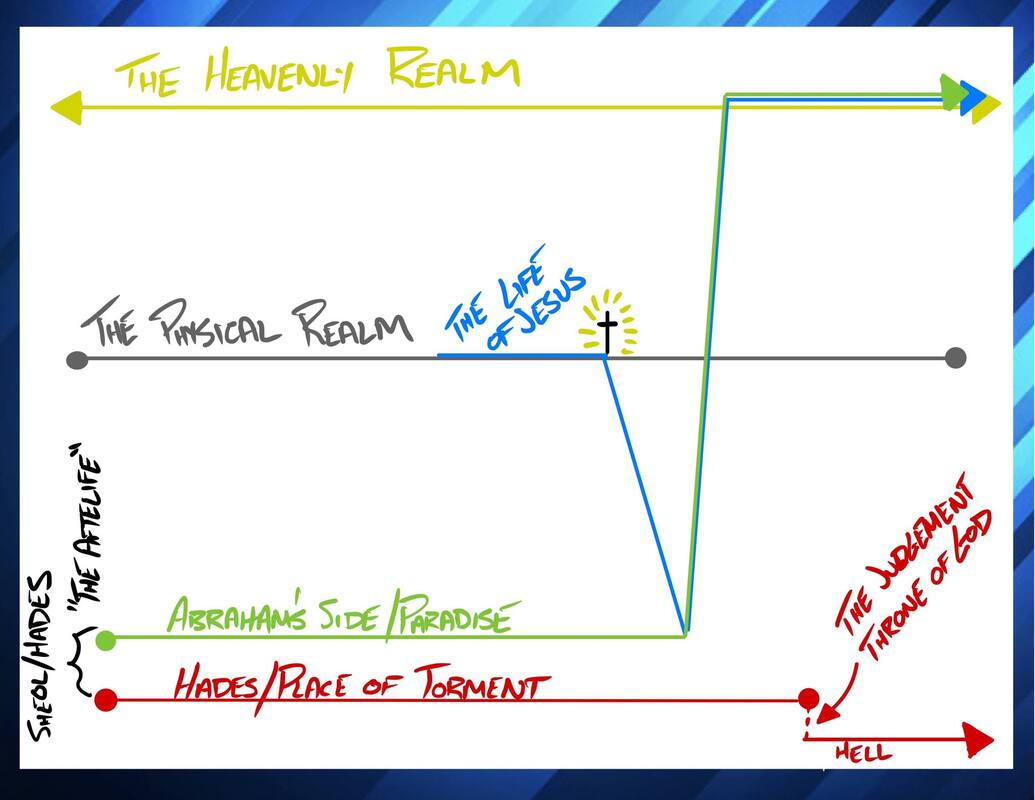
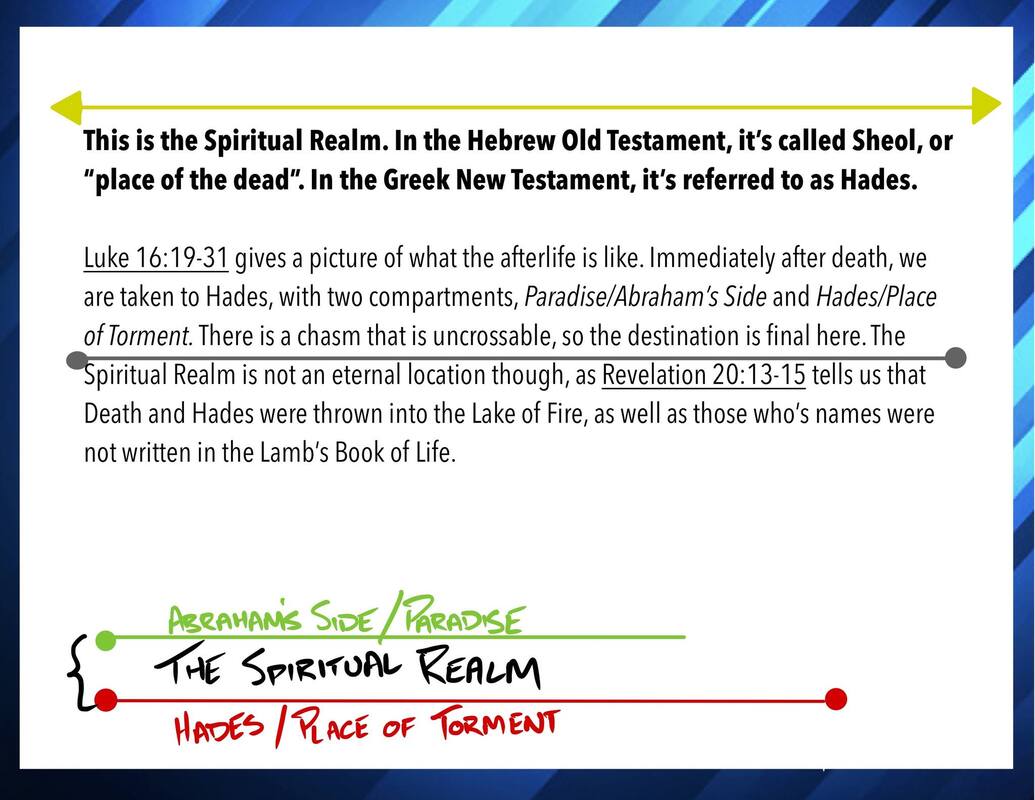
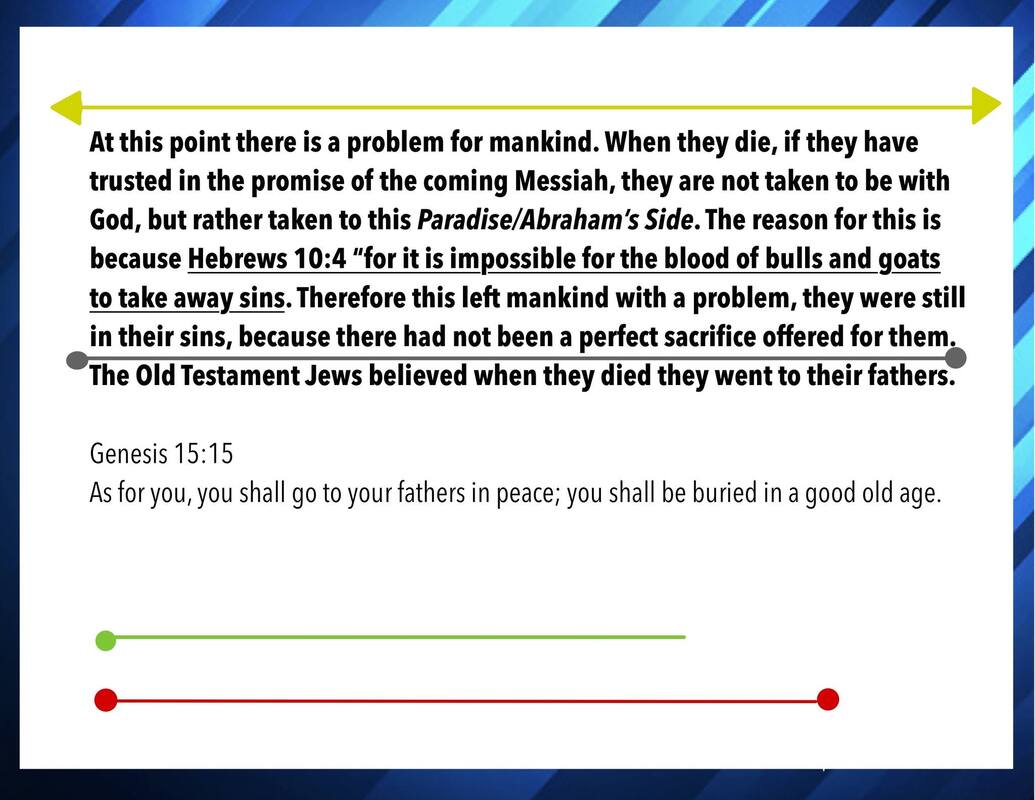
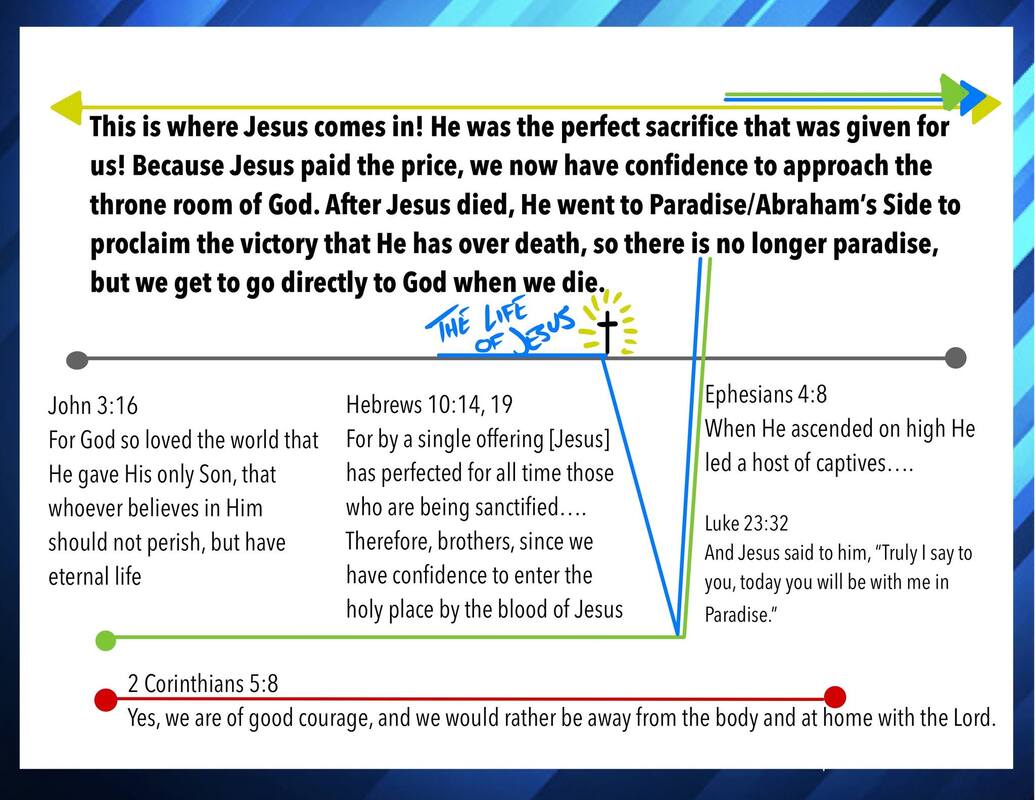
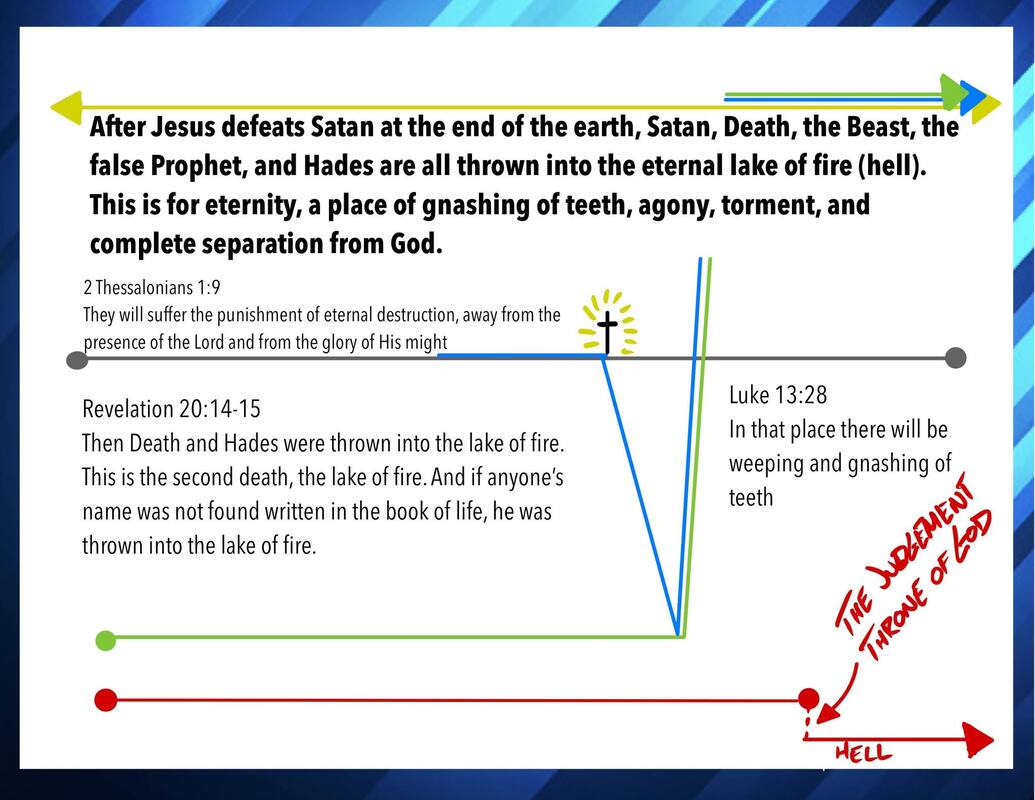
Those views are all based on interpretation of the Scripture, and some of them leave us with reading into God’s Word what God never put there. What is the condition of our souls between the moment we die and the return of Christ? We don’t know. Charles Spurgeon once said, If after that you desire to know more concerning this house, I can but give you the advice which was given by John Bunyan in a similar case. One asked of honest John a question which he could not answer, for the matter was not opened up in God’s Word; therefore honest John bade his friend live a godly life, and go to heaven, and see for himself. But Scripture doesn’t leave us without answers still. Back to the original question, what happens to our souls after we die? Paul answers this question for us in his second letter to the Corinthians. So we are always of good courage. We know that while we are at home in the body (on this earth) we are away from the Lord, for we walk by faith, not by sight. Yes, we are of good courage, and we would rather be away from the body and at home with the Lord (2 Corinthians 5:6-8). Paul leaves us with only two options, here on this earth and away from the presence of the Lord, or away from this earth and in the presence of the Lord. He doesn’t leave room for a third option. In Philippians 1:21-23, Paul says 21 for to me to live is Christ, and to die is gain. 22 If I am to live in the flesh, that means fruitful labor for me. Yet which I shall choose I cannot tell. 23 I am hard pressed between the two. My desire is to depart and be with Christ, for that is far better. Again, Paul sees that to be away from the body is to be in the presence of Christ. And in 1 Thessalonians 5:10, Paul says 9 For God has not destined us for wrath, but to obtain salvation through our Lord Jesus Christ, 10 who died for us so that whether we are awake or asleep we might live with him. Paul says that even if we are asleep (dead), we are with Him. Based on these passages, we can have confidence that those who have gone before us are in the presence of God, and we will be too after our final breath in this life, immediately before the One who loves us so much that He gave His life so that we can be with God for eternity. Two last points that we can find confidence in this view that we are immediately with God. In Luke 16, Jesus shares about what happened to a rich man when he died, and Lazarus (not Mary & Martha’s brother) when he died. We are told that when the rich man died, he was buried and was in Hades (Hebrew is Sheol, the place of the dead), and was in torment. Lazarus also died, and was taken to Abraham’s side (aka Paradise). The Old Testament Jews viewed Sheol as a place where all the dead went, for the perfect sacrifice had not been paid yet. In Sheol, the place where all the dead went (for even David mentions Sheol in his psalms), there were two “locations”, Hades (Greek, but what many people consider hell to be at this moment, where the unrighteous went) and Paradise (by Abraham’s side, where the righteous went, those who had faith in the promises of God). When Jesus was on the cross, He turned to the thief who asked Him to remember him when Jesus entered His kingdom, and Jesus replies today you will be with Me in Paradise (Luke 23:43). When Jesus died, He went and proclaimed His victory to all the saints who had died before His sacrifice, the patriarchs, the remnant that held to the promises of God, all those who were in Paradise. He proclaimed His victory, and then opened the access for them to be in the presence of God forever, because their sins were perfectly covered by the perfect blood of the Lamb of God who takes away the sins of the world. The thief on the cross was immediately in the presence of the Lord after his death. It is my confidence and belief that since the thief was with Him, why would I have to wait to be with Him after my death? Last point, look at the history and character of God. What has God desired throughout all time? He has desired to be with His people. He created Adam and Eve and walked with them. When man rebelled, He picked Abraham to create a covenant with, saying He will be his God. God then told man to build the tabernacle system, so that He could dwell among them. The Temple was built as a permanent (although insufficient) dwelling place for God to be with His people. God sent His Son to live among us, and ultimately die for us, so that we can have a hope to be with God for eternity. Upon the ascension of Jesus, God sent His Spirit to dwell in us, being a guarantee of the eternity we have where we will one day get to look upon the face of God with unveiled eyes, seeing Him in His glory! God’s desire has always been to be with His people. It is my belief and confidence that based on the character of God, and His desire to be with us, that upon my final breath on this earth, I will look upon the face of my Savior, and dwell with Him forever. What form I will be in until my resurrected body, I honestly don’t think I’ll care, my focus will be on Him. |
RSS Feed